Survival horror is ruling the 2026 gaming sphere, with new titles dropping almost every week. The genre is immensely popular for its scare factor, promoting a sense of unease in players faced with monsters beyond their wildest imaginations. While some games focus heavily on fighting through grotesque beings, others encourage a more subdued approach. Sometimes the best way to ensure your survival is to hide, crouch, and stay out of sight, standing in direct contrast to most games that want their players going out guns blazing.
While it seems counterintuitive, these 2026 survival horror titles encourage stealth, equipping players with minimal or breakable weapons, melee or otherwise, that only aggravate combat situations. These weapons are purposefully weak, forcing players to use other avenues that make the experience truly about surviving horrors. Survival is based on wit and subtlety, employing a sense of real fear that comes with taking things slow. In short, no amount of weapons will save you.
Resident Evil Requiem
Two Requiem Bullets And A Dream
-
 Image via Capcom
 -
 Image via Capcom
 -
 Image via GameRant; Source: Capcom
While Leon S. Kennedy’s sections in Resident Evil Requiem feel more action-packed, Grace Ashcroft’s stand in contrast as she is minimally equipped throughout most of the game, save for later sections. This choice on Capcom’s part serves two purposes: emphasizing Grace’s lack of skill in the field and creating an authentic survival horror experience, while juxtaposing Leon’s action horror sections. Kicking off this 2026 title with Grace, players are treated to a true survival horror experience, a genre Resident Evil was built upon.
Taken from her desk job as an intelligence and technical analyst for the FBI, Grace is thrust into a scary situation in hopes of finding answers surrounding her mother’s murder, but she’s no pro DSO agent. Grace serves as the brains of the FBI, collecting data behind a screen, and her gameplay emphasizes that. She stumbles, stutters, and reacts like any normal person would while experiencing horrors in the Wrenwood Hotel and, eventually, the Rhodes Hill Chronic Care Center. Grace is given a smattering of bullets for a gun she barely knows how to work, a knife if she can find one, and a few bottles.
Guns found later on are not as powerful as the trusty Requiem, but can be used to weaken enemies in a pinch. Grace’s gameplay isn’t about downing enemies with style; it’s about creating an authentic survival horror experience that scares players to their core. Utilizing bottles to distract, strategically using the Requiem to take out larger enemies in your path, and crafting knives to use as defense against a zombie’s grab are your best bets for survival.
Weapons are offered for strategic purposes and used by players to tackle tough situations rather than blasting their way through them. Weak weaponry during Grace’s sections is also what makes Leon’s sections feel so much more badass. The seasoned DSO agent knows what he’s doing, and his combat gameplay and weapon arsenal reflect that.
Silent Hill: Townfall
Closets And Bricks Are Your Best Friends
-
 Image via Konami
 -
 Image via Konami
 -
 Image via Konami
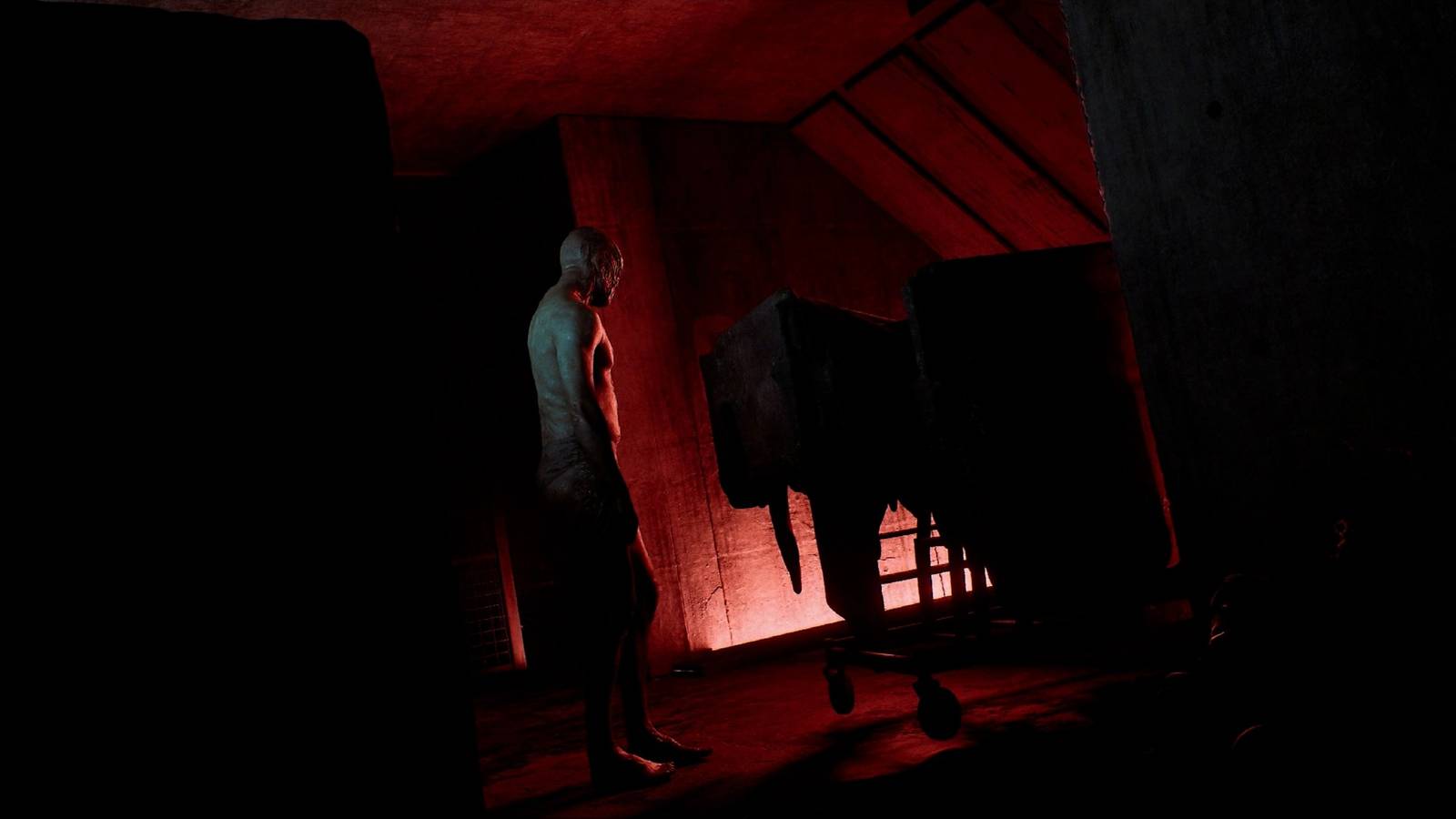
While playing through Silent Hill: Townfall, one of the first things I noticed was that Simon’s weaponry is pretty pathetic. Strikingly so. Like most (if not all) Silent Hill games, your main protagonist is often equipped with a wooden plank, or even a lead pipe. Eventually, though, they get a substantial firearm, albeit bullets are scarce. With this structure in mind, I felt that Silent Hill: Townfall was oppressively harder than the rest. Melee weapons degrade quickly, and there is a distinct lack of any “big boy” weapons until the latter half of the game, a la the shotgun or flare gun.
Interestingly, other recent Silent Hill titles like Silent Hill 4: The Room and Silent Hill f feature a durability bar, while past entries do not. For Silent Hill: Townfall, I would boil the mechanic’s usage down to a key item: the radio. Rather, weak melee weapons are a consequence of the radio. It features a viewfinder that allows players to see enemies almost at all times, dismantling any unknowns, thus softening the survival horror element. To increase the difficulty lost from the added radio mechanic, it seems weapon degradation was added.
When Simon does get a measly handgun, like in Resident Evil Requiem, he is gifted a handful of bullets meant to be used sparingly in tight situations. Even worse, when you do manage to fire your gun, it will only alert more enemies to your position. Faulty weaponry and a lack of firepower make it imperative that players focus on stealth rather than fighting any enemies they stumble upon. Utilizing closets, keeping an eye on that radio viewfinder, tossing carefully placed bricks, and planning a path to victory with the game’s detailed map system is your best chance for survival.
Silver Pines
Everything Is Stacked Against You
Silver Pines is one of those survival horror games where the odds are not in the player’s favor. Every gameplay element points to stealth as an optimal way to tackle situations. Like Silent Hill: Townfall, weapons degrade after a few good swings. Repairing weaponry requires crafting repair kits or finding duct tape hidden in specific areas, another small feat to overcome. When swinging a weapon, the swing arc is slow and weighty, meaning you must time your attacks perfectly if you plan to down enemies with any semblance of grace.
Once firearms are acquired, they can be quite cumbersome. Guns feature extremely limited ammunition, as one would expect from a survival horror game, and are extremely finicky, with high recoil and lengthy reload times. If players aren’t careful, they could get stuck reloading while an enemy is barreling towards them, moving much faster than the player can react. Fighting may mean death, especially with an extremely short stamina meter, yet another element to worry about when fighting. Running main character Red Walker’s stamina down means he could end up hurt or worse.
Fighting is a strategic move in Silver Pines that doesn’t always pay off. Yes, an enemy may be dead, but was damaging a melee weapon or getting hurt worth it? The moral of the story is that you do not need to kill everything that you come into contact with. Using the dodge function or running away is a valid response to danger. Circumnavigating traditional stealth, Silver Pines features immersive audio cues that signal danger. Once you learn specific sound cues and which enemies are tied to them, survival should be a piece of cake. It’s all about learning your surroundings, treating each section of the map like its own puzzle to solve, and utilizing a limited arsenal wisely.
Reanimal
Environmental Puzzle Solving Is Your Saving Grace
-
 Image via Tarsier Studios
 -
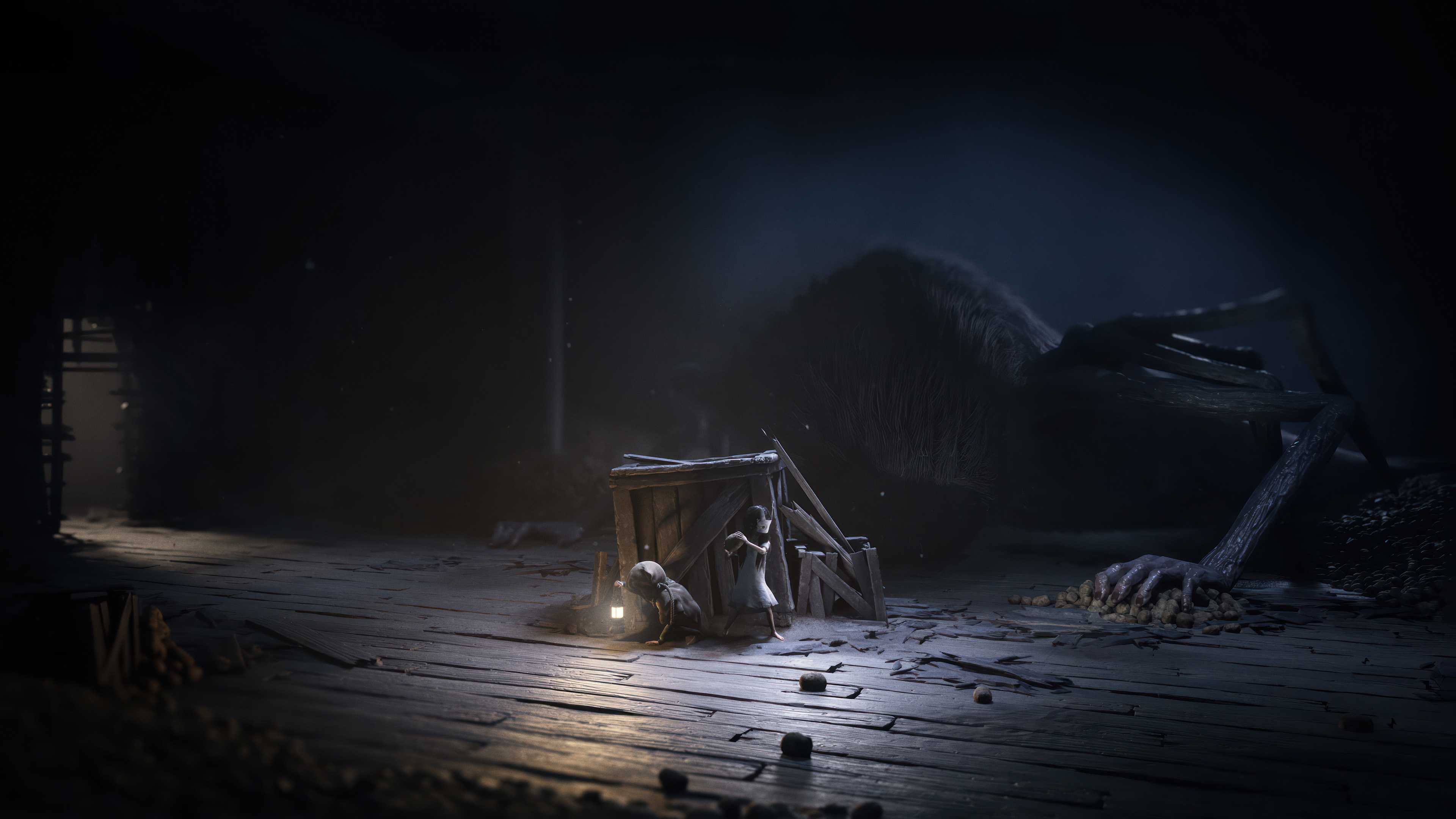 Image via THQ Nordic
 -
 Image via Tarsier Studios
Rather than being weak, Reanimal‘s weapons system is minimal and subdued, staying true to the survival horror genre. Instead of standard guns, weapons are more like environmental objects you pick up during the journey. Things like lighters, crowbars, spears, harpoons, and even cannons can get the Boy and the Girl out of sticky situations. Instead of tackling larger threats like bosses head-on, you can use puzzles found in the environment to down or bypass threats. Hiding perfectly behind boxes to block enemy fire, tossing objects at baddies to keep them at bay, and lighting the way in dark spots are keys to survival.
Environmental puzzle solving in particular has a lot to do with successful encounters in Reanimal. This is to be expected from a game created by Tarsier Studios, the developers behind the Little Nightmares series. These kinds of titles require thought before action, making a plan before executing it to avoid death. That means timing a jump just right, getting a partner or AI companion to help with puzzle navigation, and utilizing sharp corners while running to confuse enemy pathfinding. Strategy and stealth go hand-in-hand with Reanimal, a slow and steady approach that takes thought to succeed rather than hefty weaponry.
Who’s That Character?

Identify the silhouettes before time runs out.
Directive 8020
Choices Made Directly Impact Survival
-
 Image via Game Rant; Source: Supermassive Games
 -
 Image via Supermassive Games
 -
 Image via Supermassive Games
As seen in all of these 2026 survival horror titles, encounters are usually survived via stealth, with a focus on building tension and hiding when enemies draw near. No game amplifies that message more than Supermassive Games’ Directive 8020, a sci-fi survival horror narrative adventure game that features almost no traditional weapons. Tension is created through situations and the choices players make, instead of relying on impactful combat.
Players are given an Electric Stun Baton that only temporarily stuns monsters, giving you another chance to run and hide. Relaxing exploration scenes with scenic environments are juxtaposed with heart-pounding QTEs and palm-sweating stealth sections where you are forced to stay out of sight, utilizing the shadows to your advantage.
Interestingly enough, the game does feature a captain’s revolver, the only standard-issue weapon available aboard the Cassiopeia. You can choose to authorize or refuse the gun’s use under code 552 of the Corinth Captain’s Charter. This decision serves as a narrative choice, rather than being used as a fully-fledged weapon unlock. If players decide to use it, stray bullets might puncture the ship’s hull, compromising ship systems. Authorizing usage also changes the way the crew aboard the Cassiopeia interact with you, changing dialogue options and the fates of some crewmembers.
Choices made by players have real consequences in Directive 8020, affecting perception and outcomes. Choices hold more weight in this game than any weapon could. That’s what’s so terrifying, not the high-octane battles with monsters using guns that pack a punch. Supermassive Games is best known for this dynamic, as seen in the studio’s hit games Until Dawn and The Quarry. How the story plays out is up to the players; weapons are only a fraction of the overall narrative.
PakarPBN
A Private Blog Network (PBN) is a collection of websites that are controlled by a single individual or organization and used primarily to build backlinks to a “money site” in order to influence its ranking in search engines such as Google. The core idea behind a PBN is based on the importance of backlinks in Google’s ranking algorithm. Since Google views backlinks as signals of authority and trust, some website owners attempt to artificially create these signals through a controlled network of sites.
In a typical PBN setup, the owner acquires expired or aged domains that already have existing authority, backlinks, and history. These domains are rebuilt with new content and hosted separately, often using different IP addresses, hosting providers, themes, and ownership details to make them appear unrelated. Within the content published on these sites, links are strategically placed that point to the main website the owner wants to rank higher. By doing this, the owner attempts to pass link equity (also known as “link juice”) from the PBN sites to the target website.
The purpose of a PBN is to give the impression that the target website is naturally earning links from multiple independent sources. If done effectively, this can temporarily improve keyword rankings, increase organic visibility, and drive more traffic from search results.